Armazém
Campolide, Lisbon
Project Overview
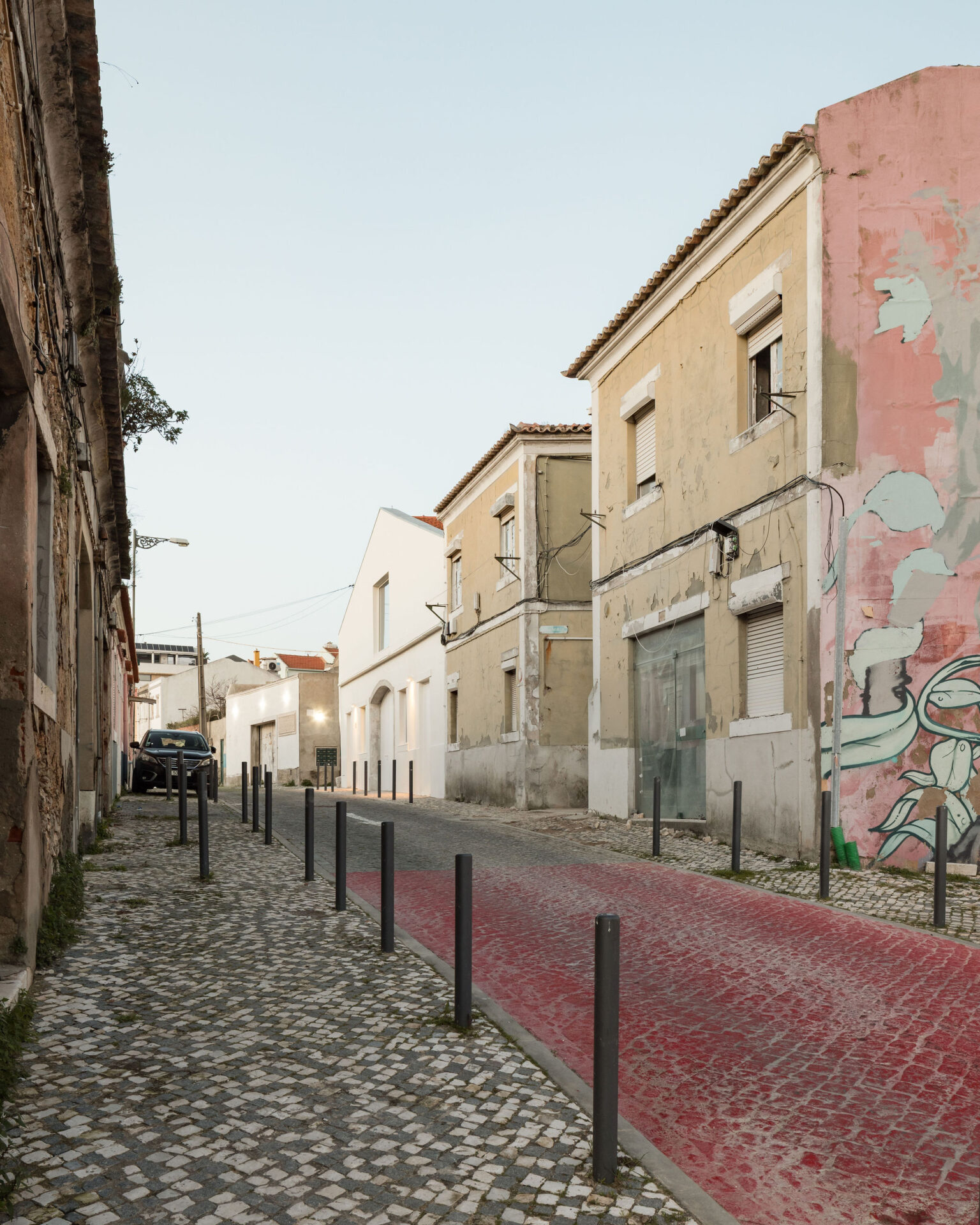
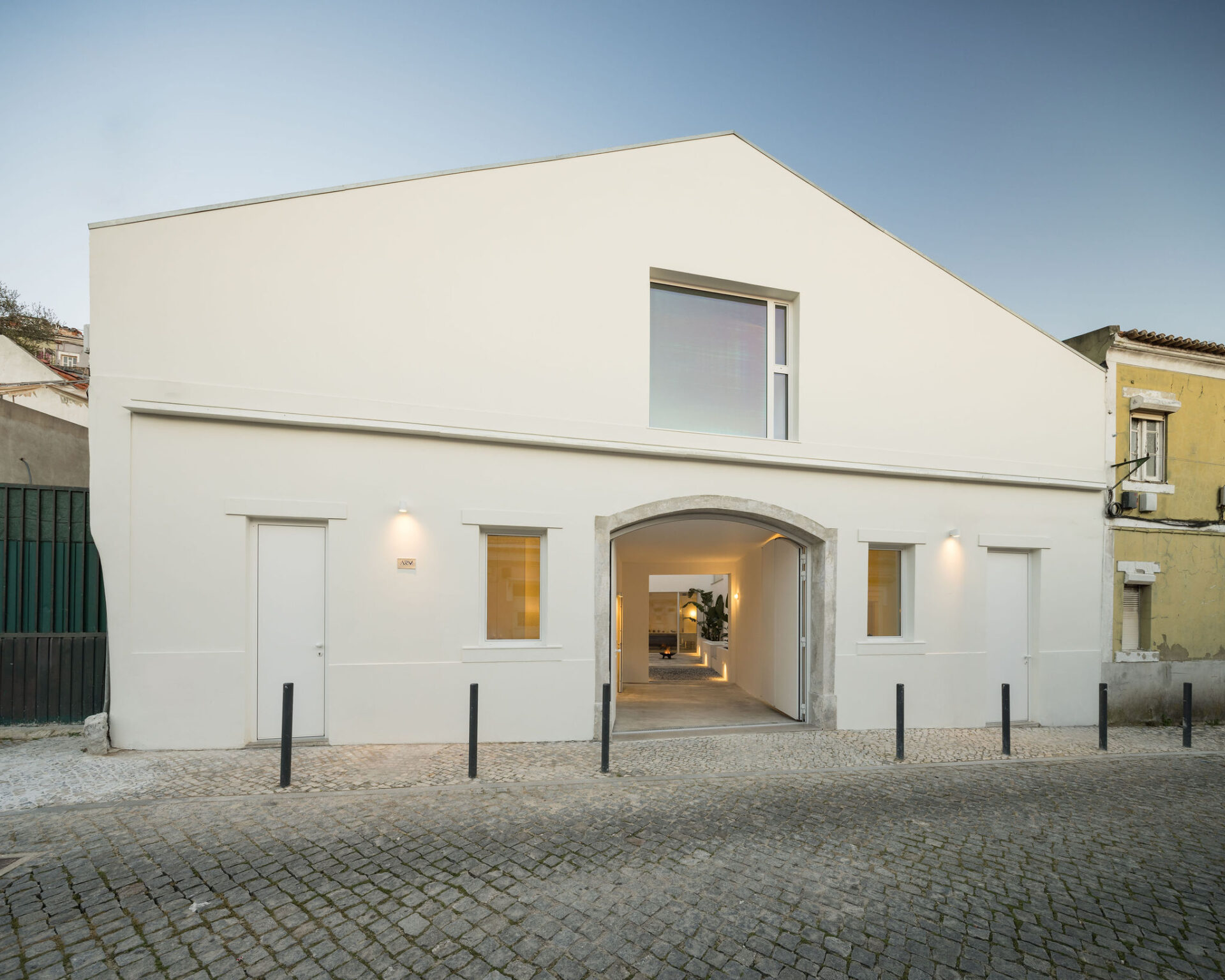
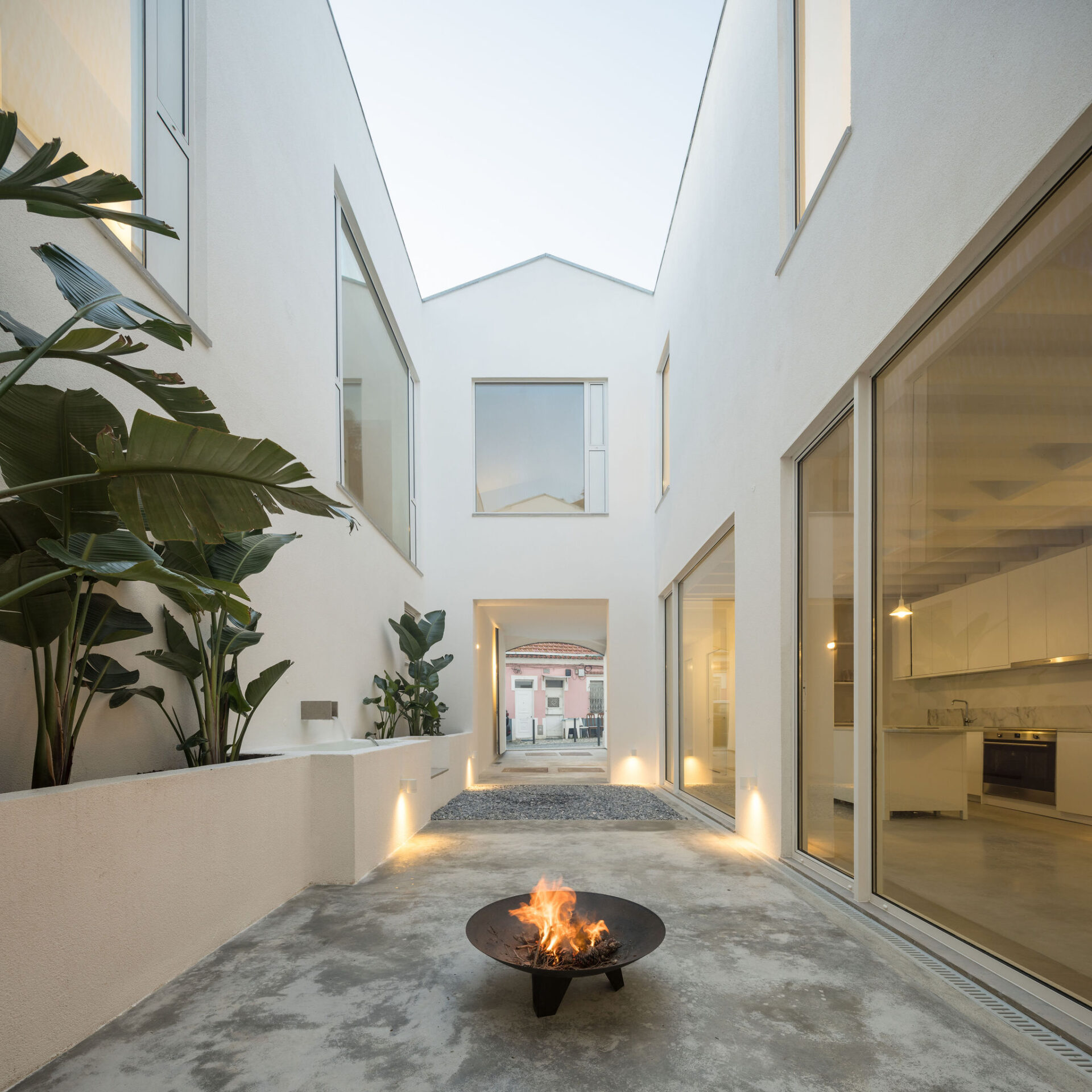
Armazém Campolide is the conversion of a former warehouse in central Lisbon into a private residence organised around light, volume, and internal courtyards. The project reworked an industrial structure into a two-level home while retaining the scale and character of the original building.
- Details
- 450 m²
- New build
- Family home
- Varying land levels
- Scope
- Build
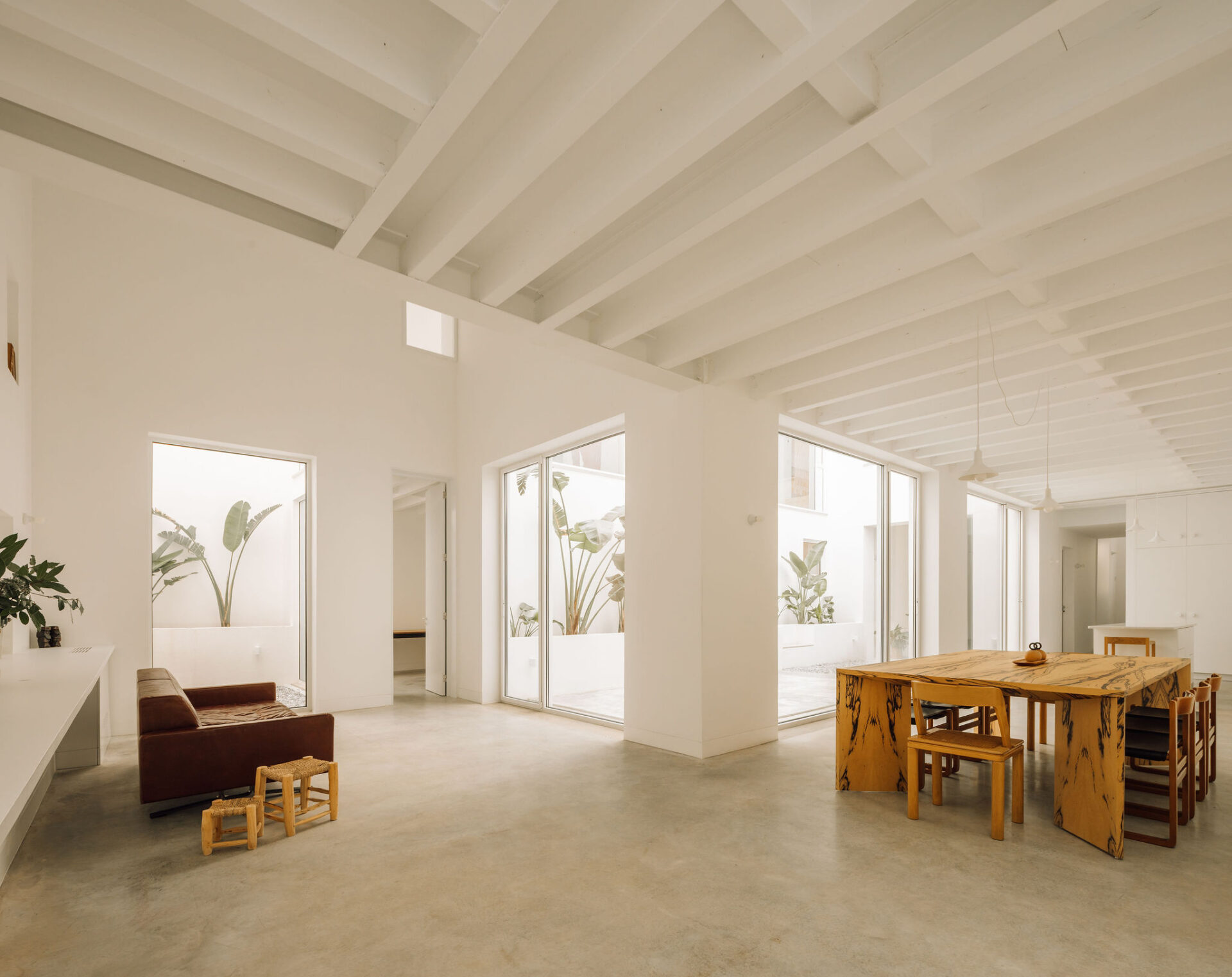
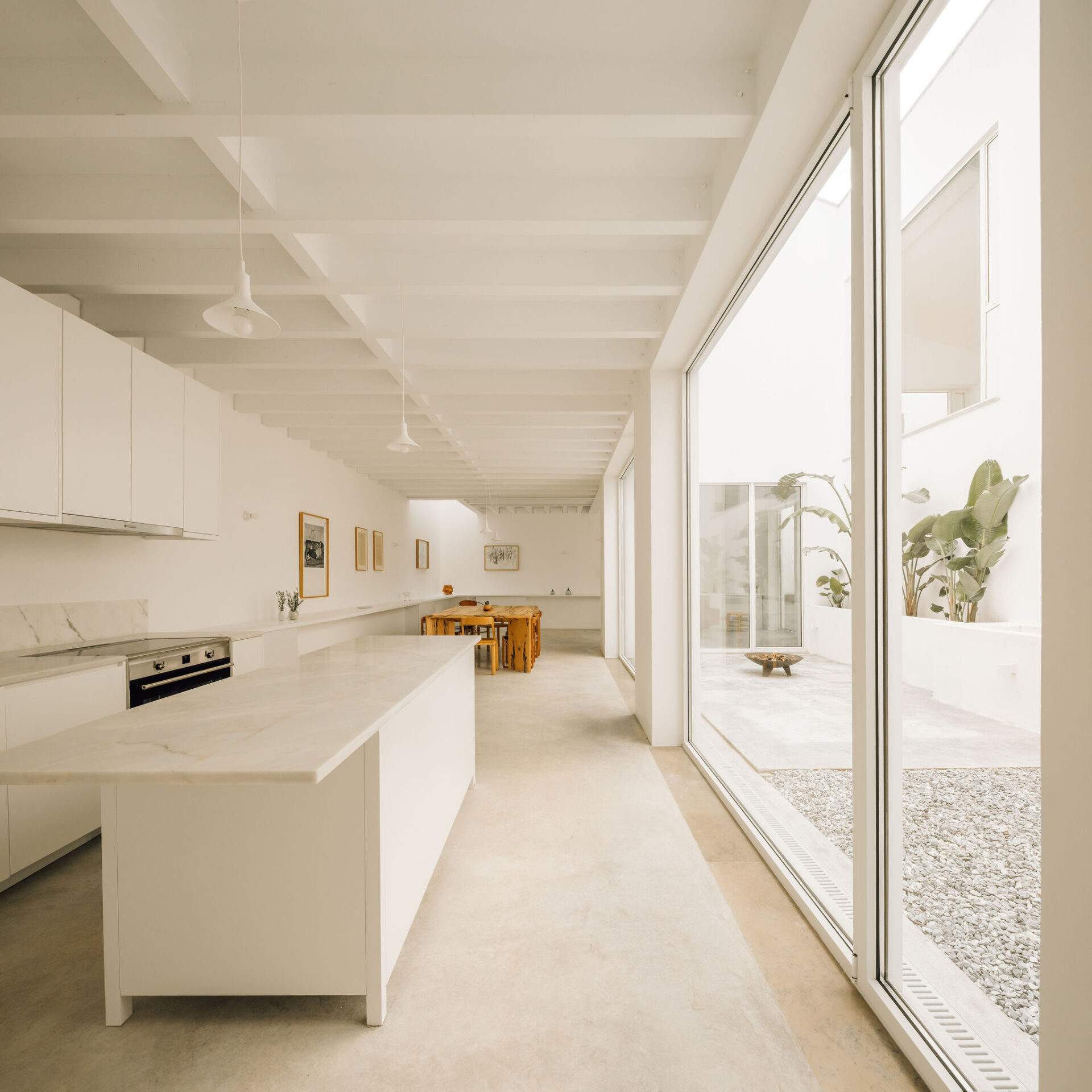
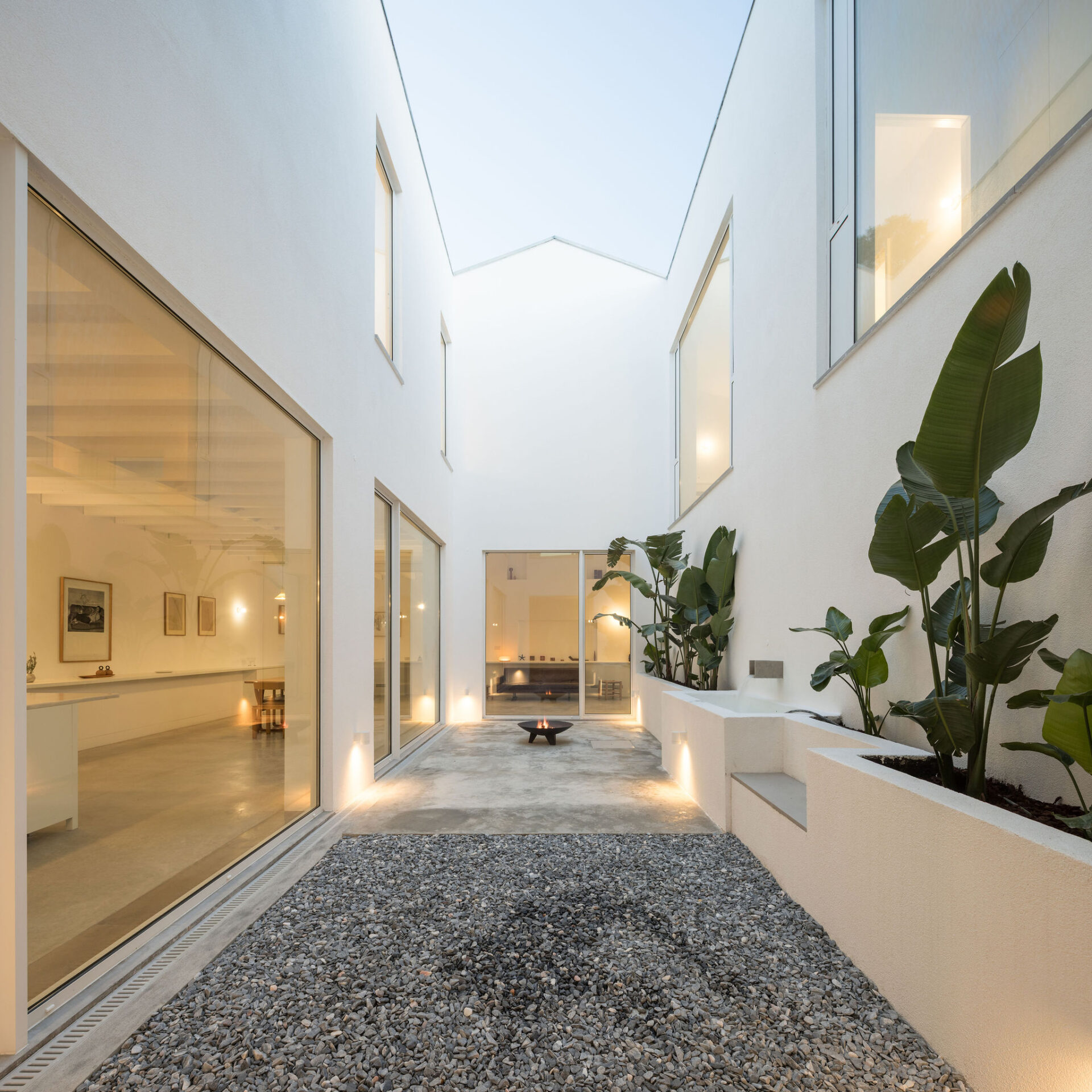
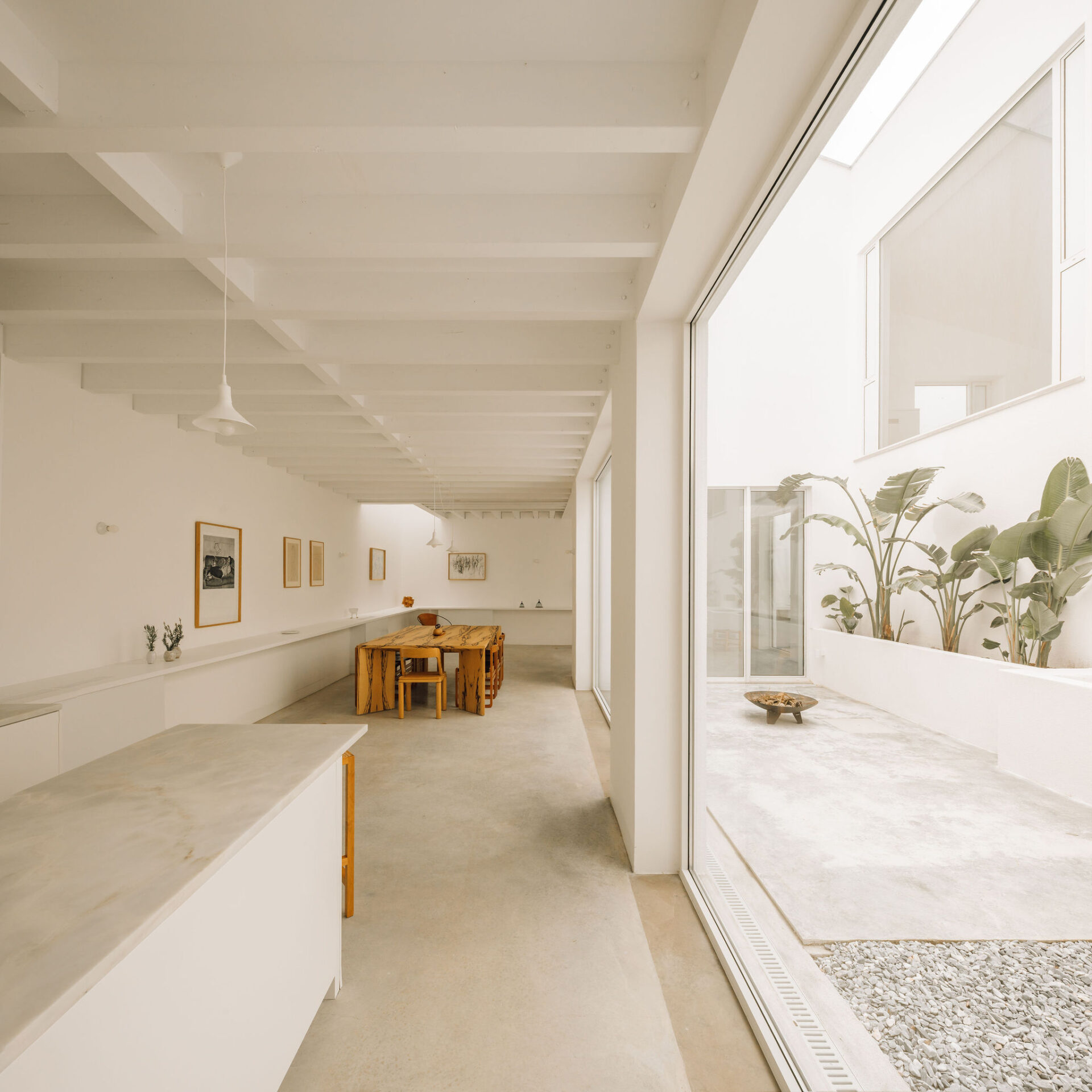
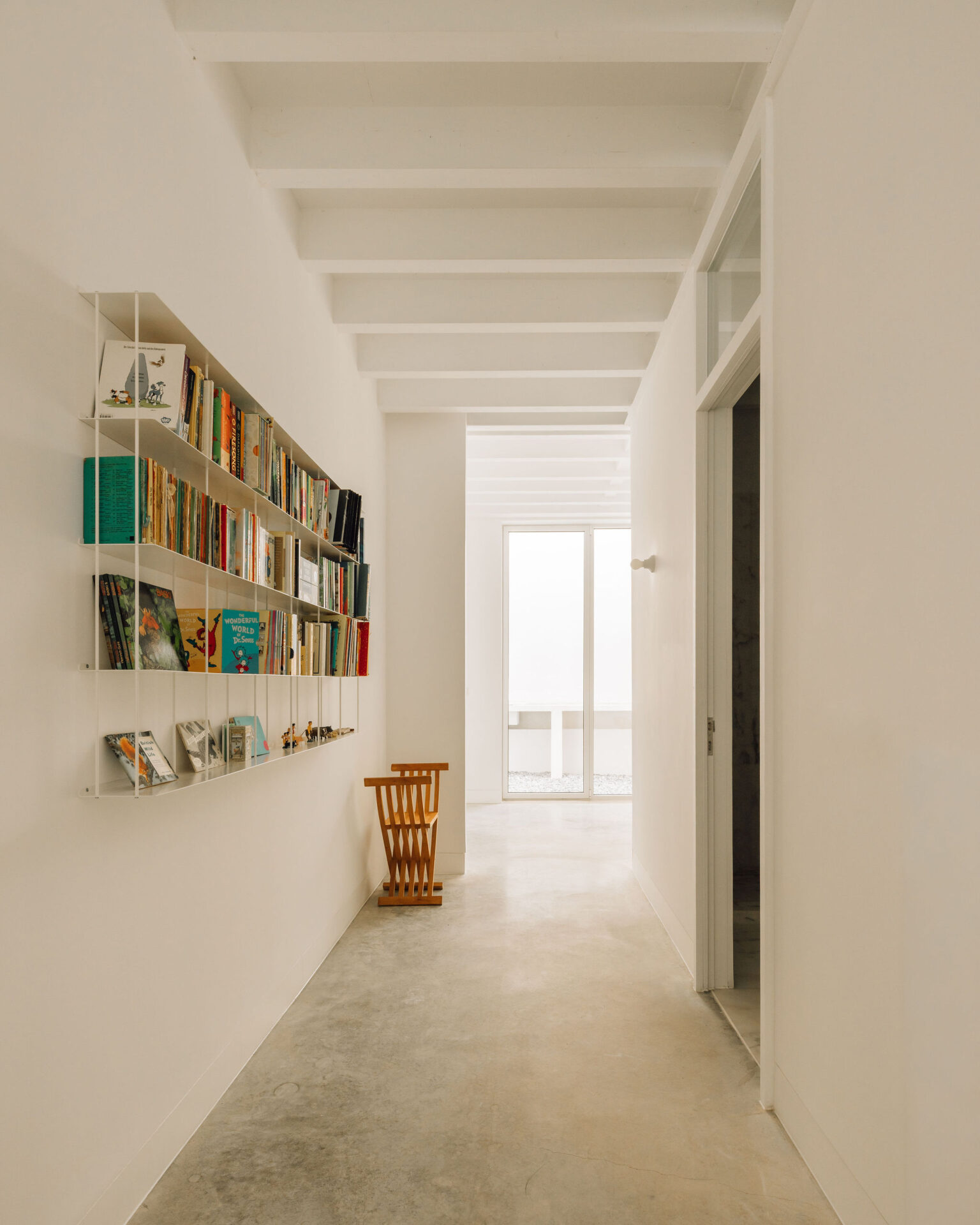
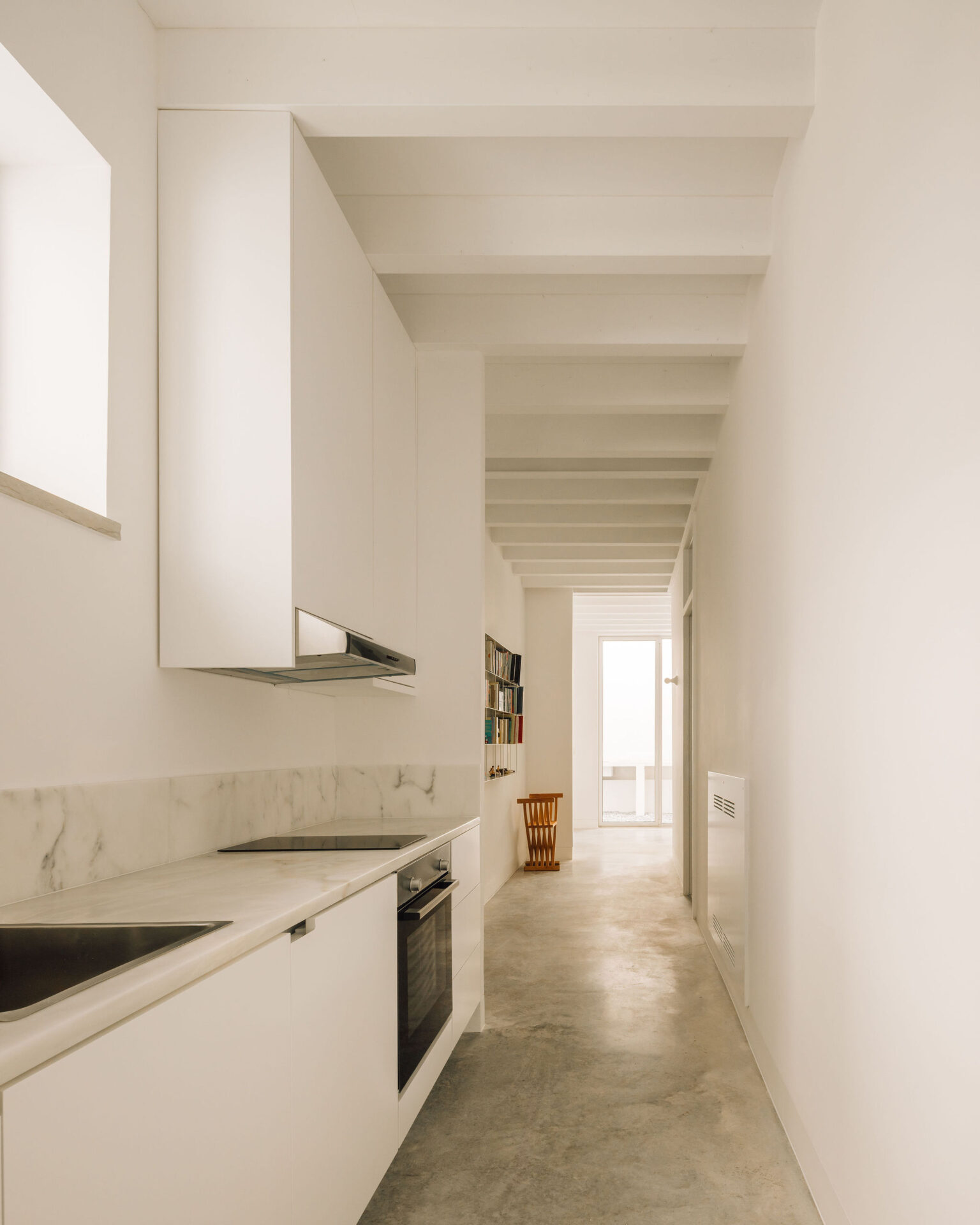
The ground floor is defined by a large open-plan living space, structured around two full-height courtyards that bring natural light deep into the plan. Exposed beams and polished concrete floors reinforce the building’s original industrial language, while new interventions introduce a more domestic scale. A continuous ledge runs along the perimeter of the space, designed to accommodate art, lighting, and objects, with additional niches carved into the double-height volume.
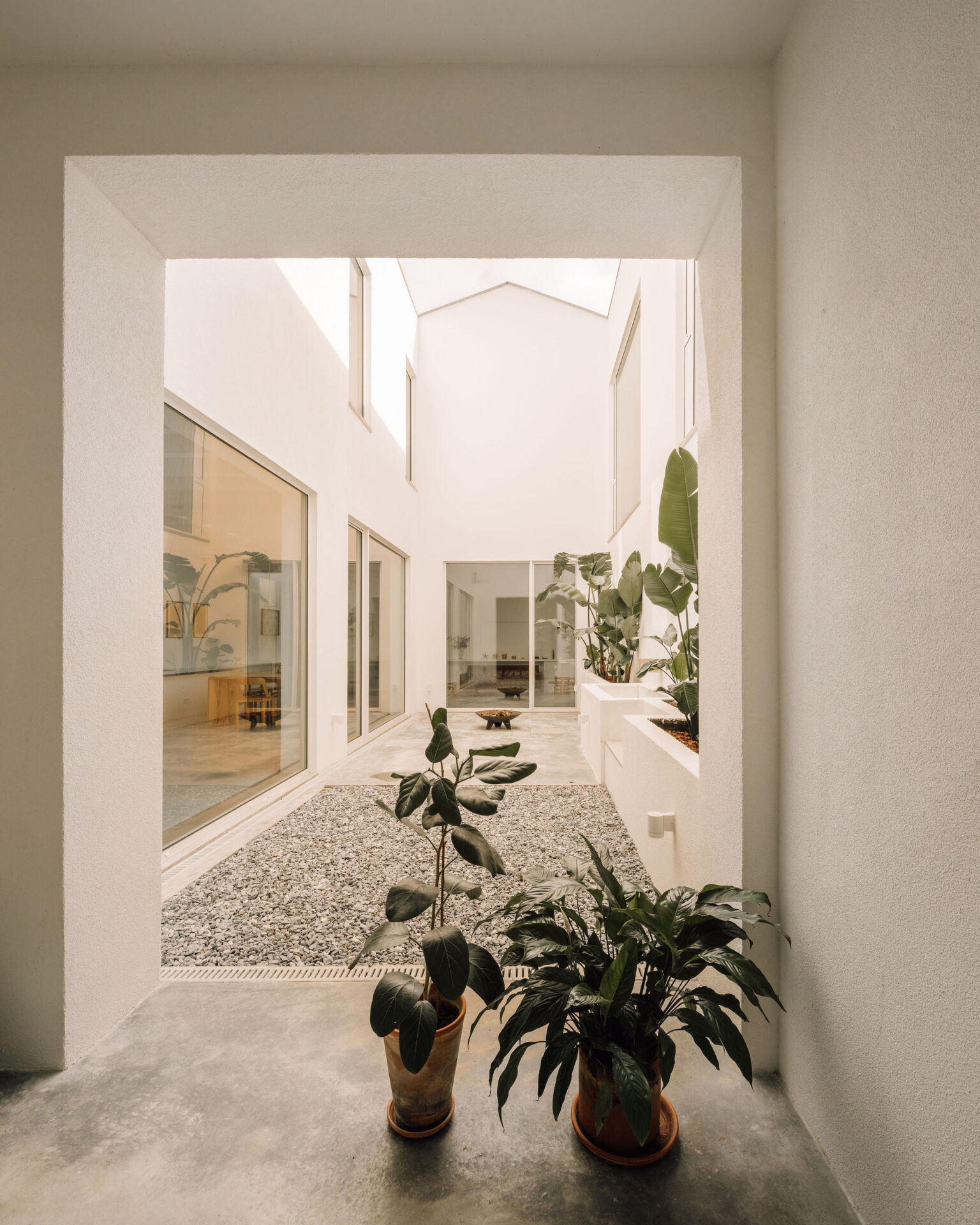
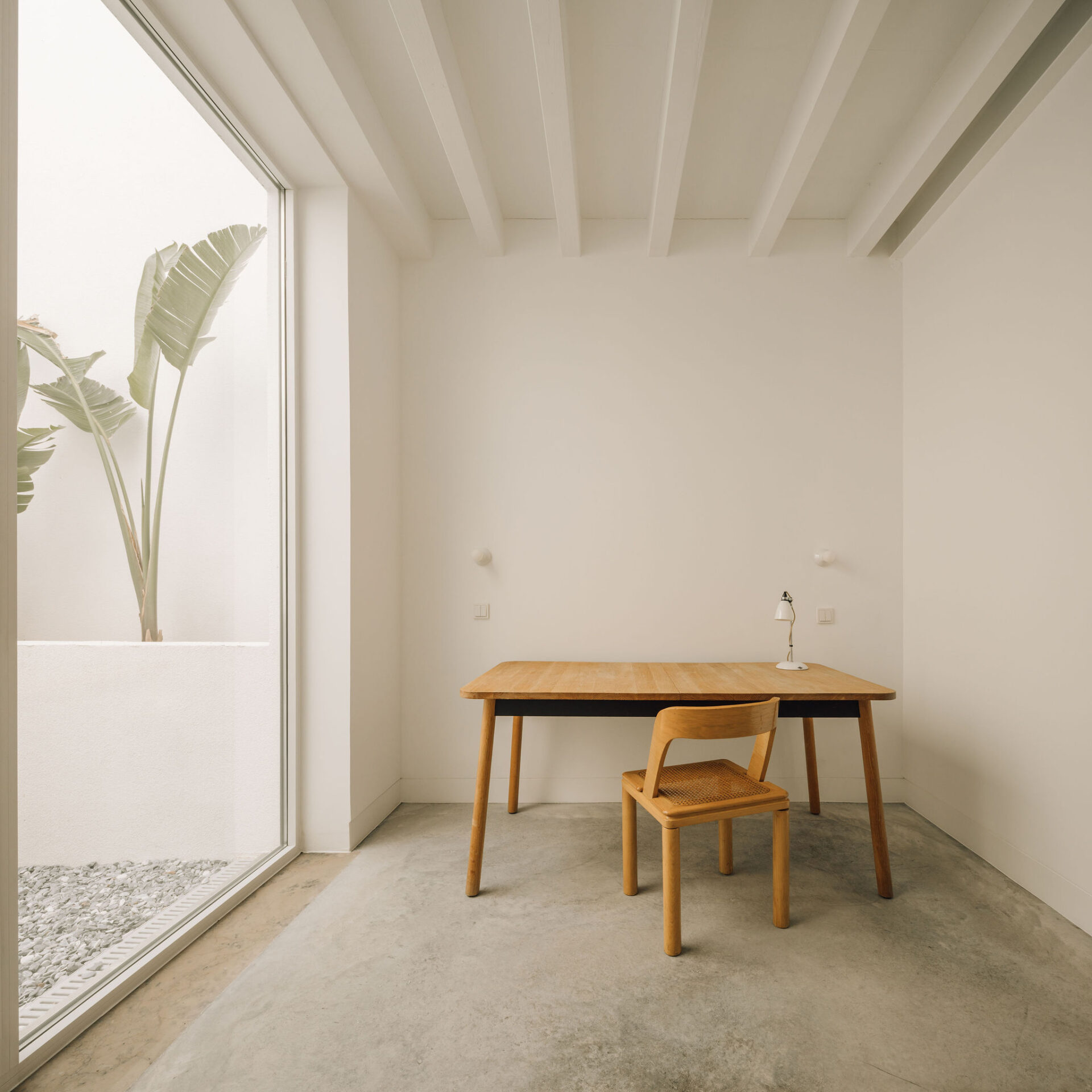
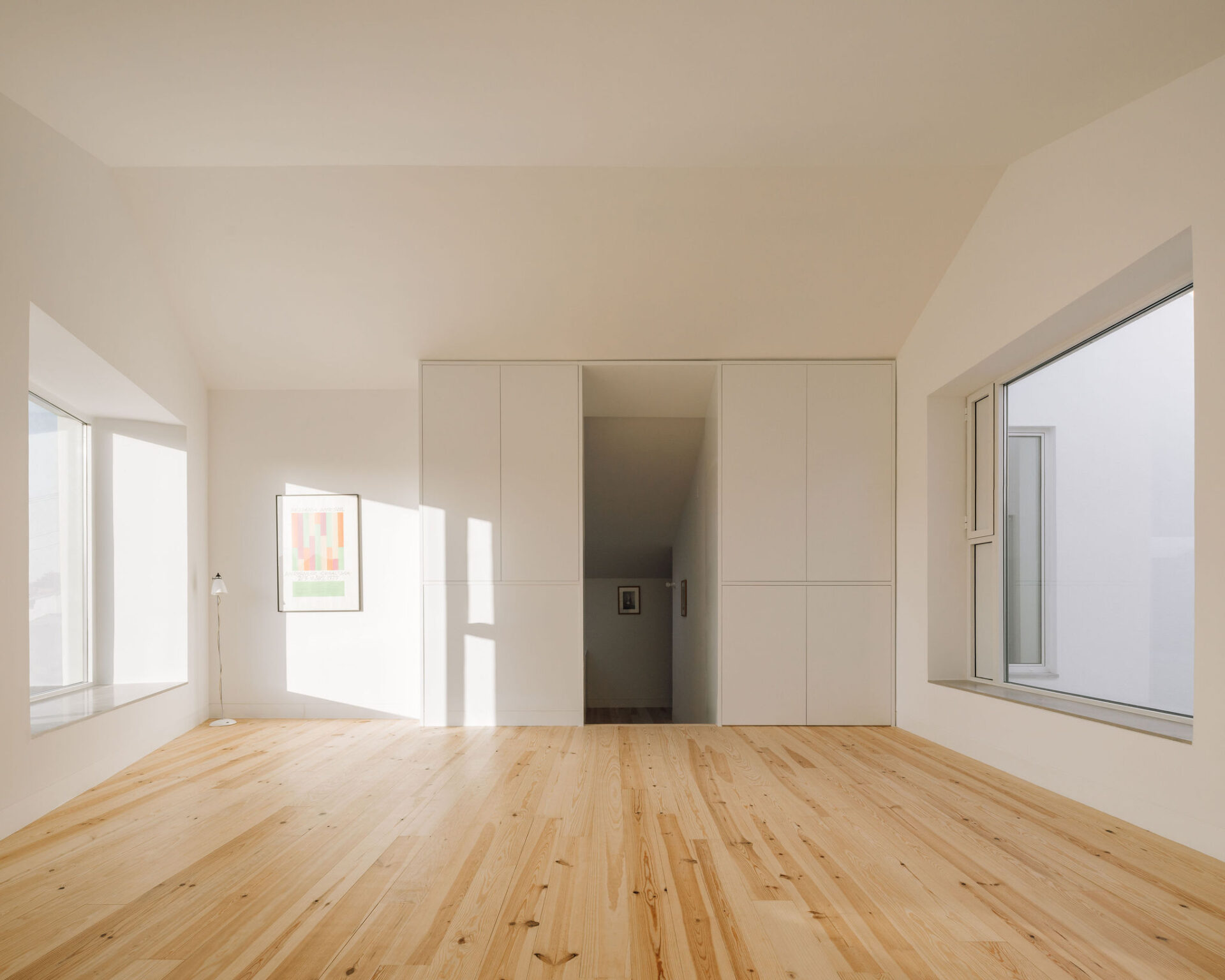
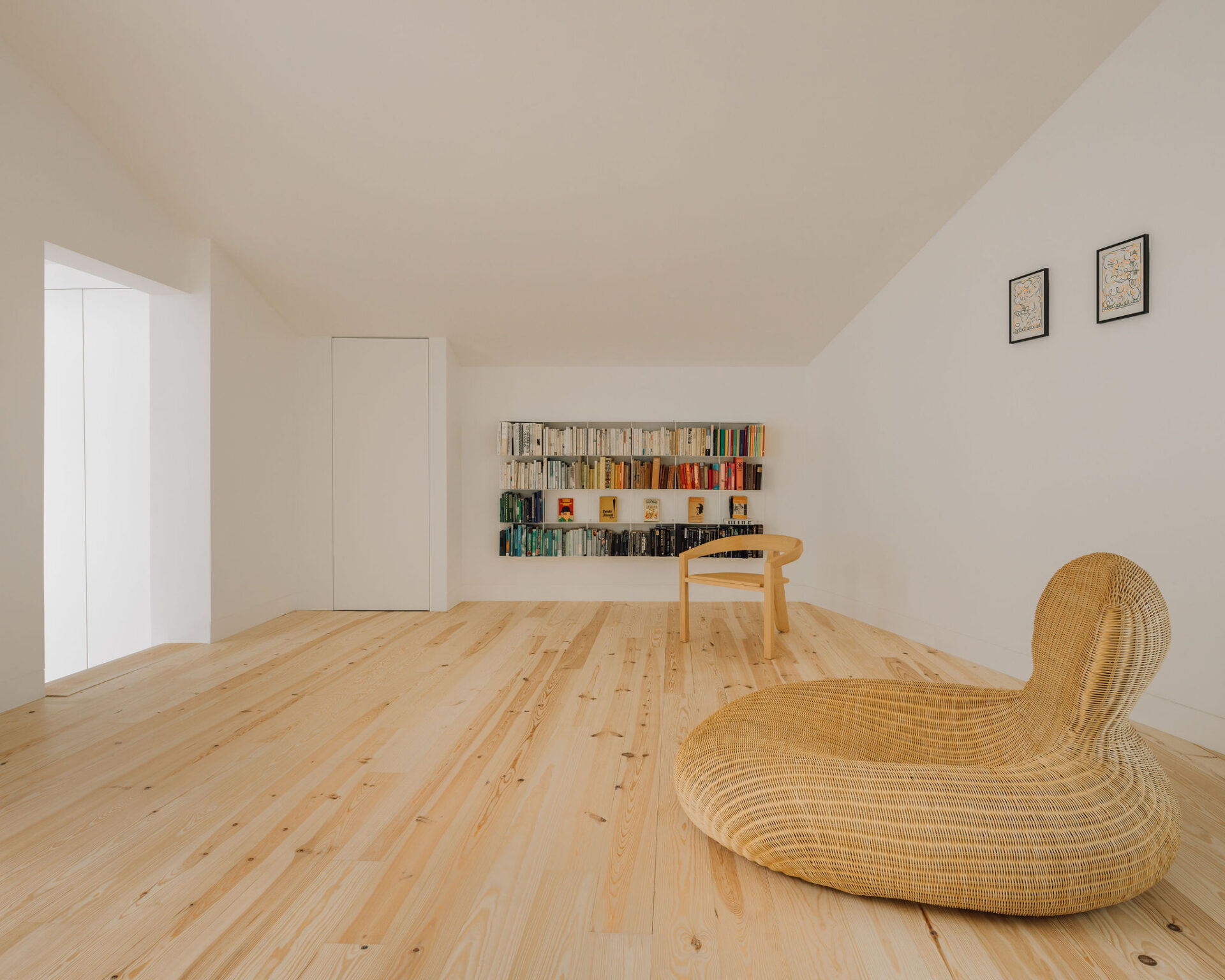
A new upper level is inserted within the original frame, organised around a central library overlooking one of the courtyards. This space acts as a threshold between the master suite on one side and three additional bedrooms on the other. Openings to both courtyard and street create a dual orientation, with views extending towards Monsanto.
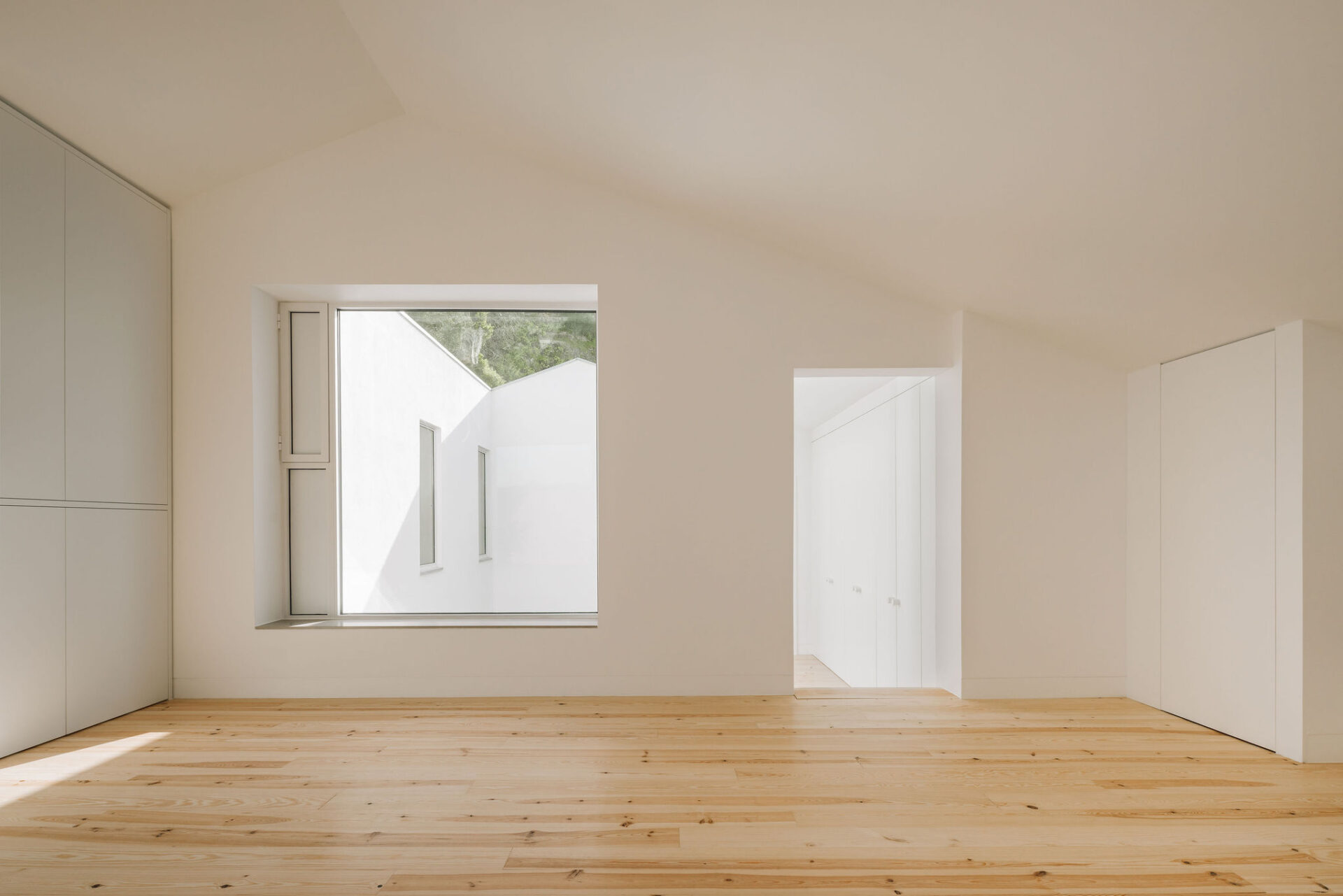
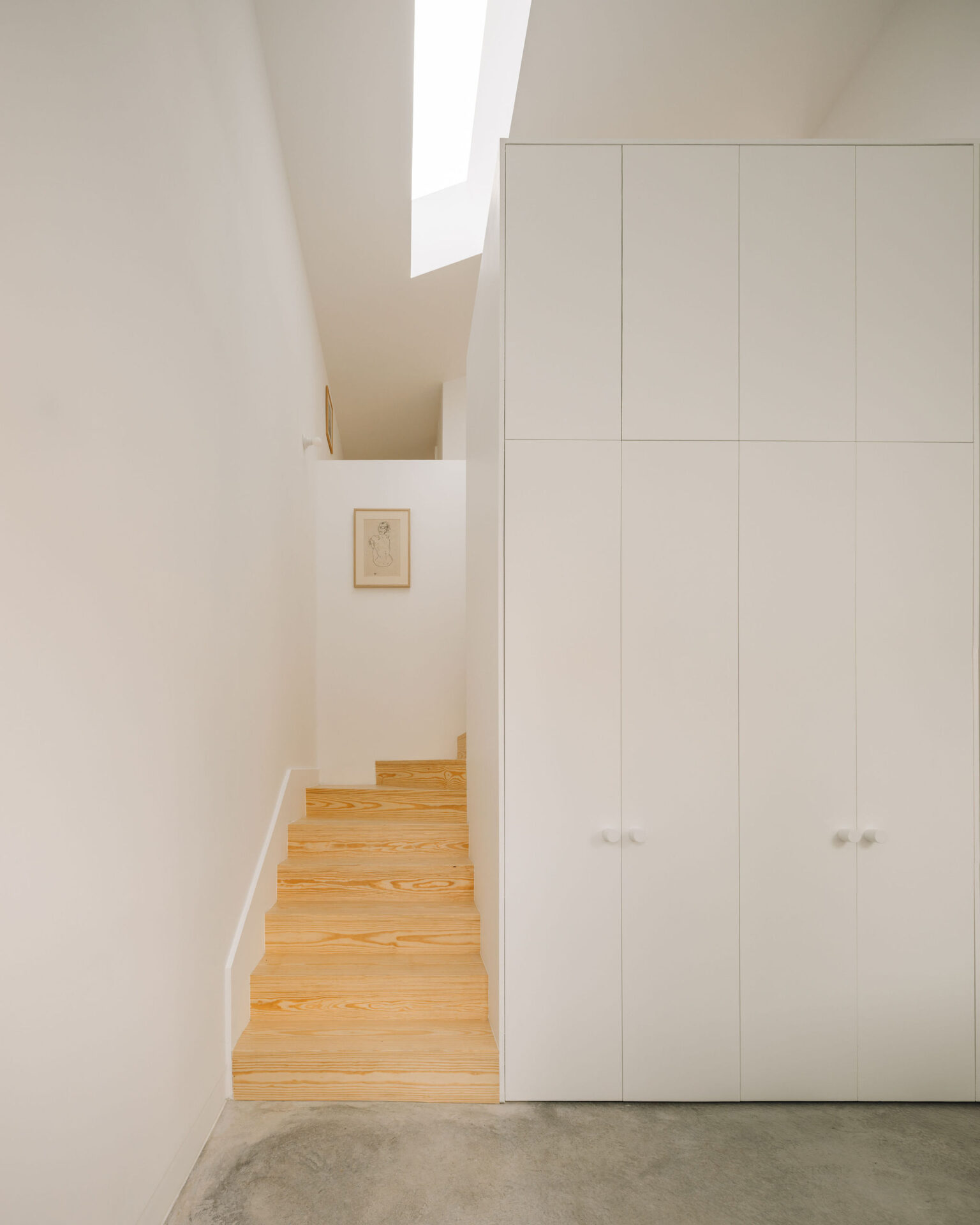
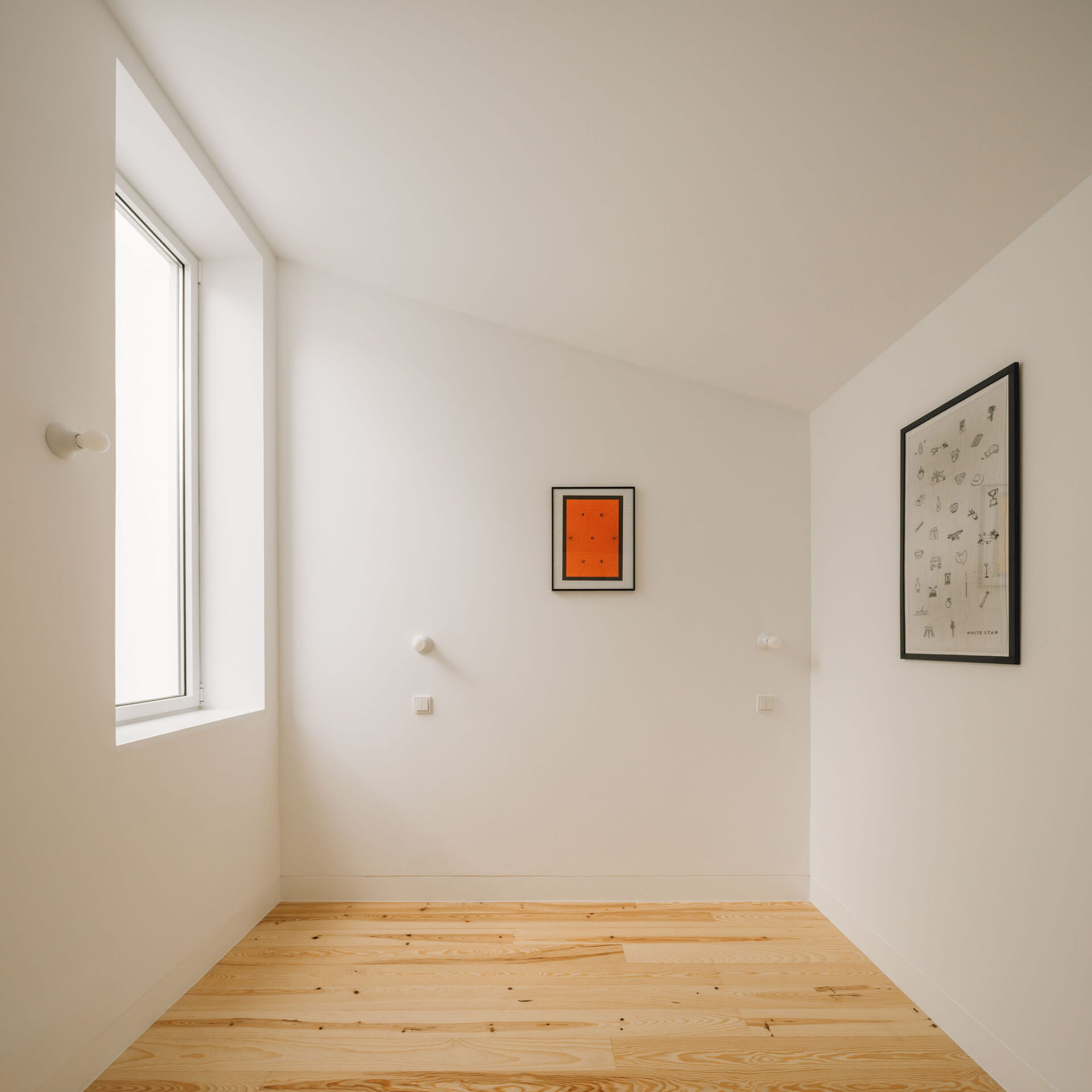
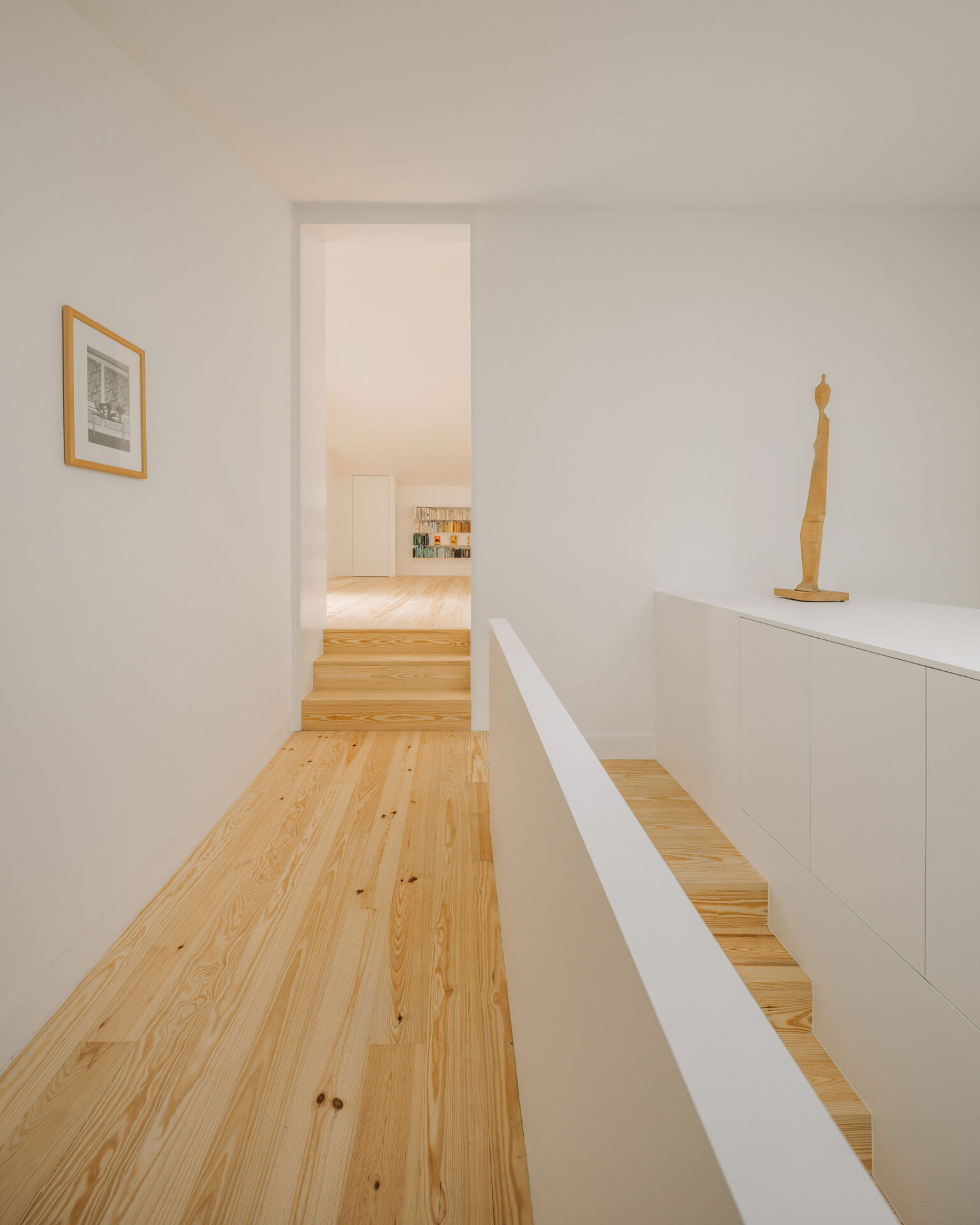
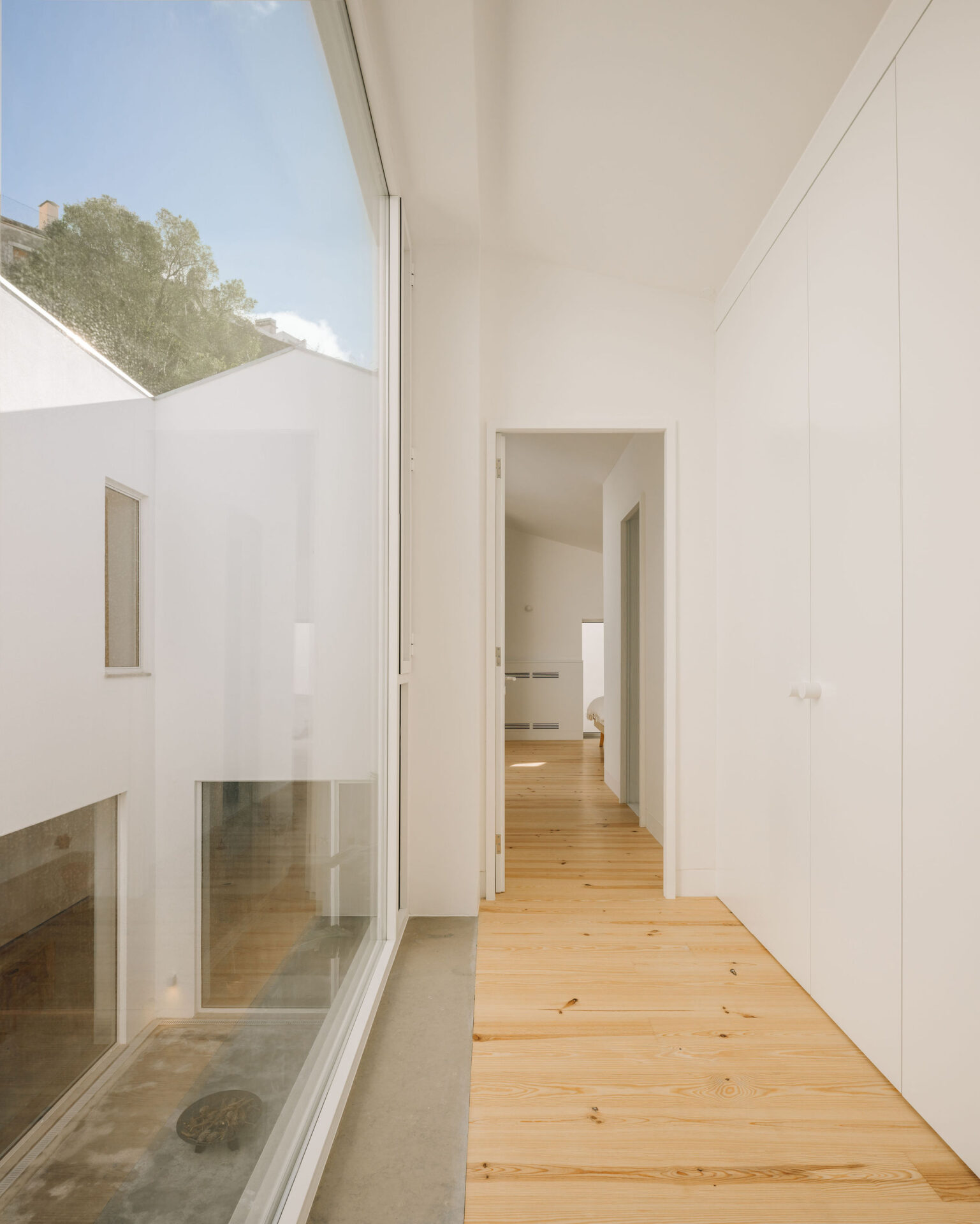
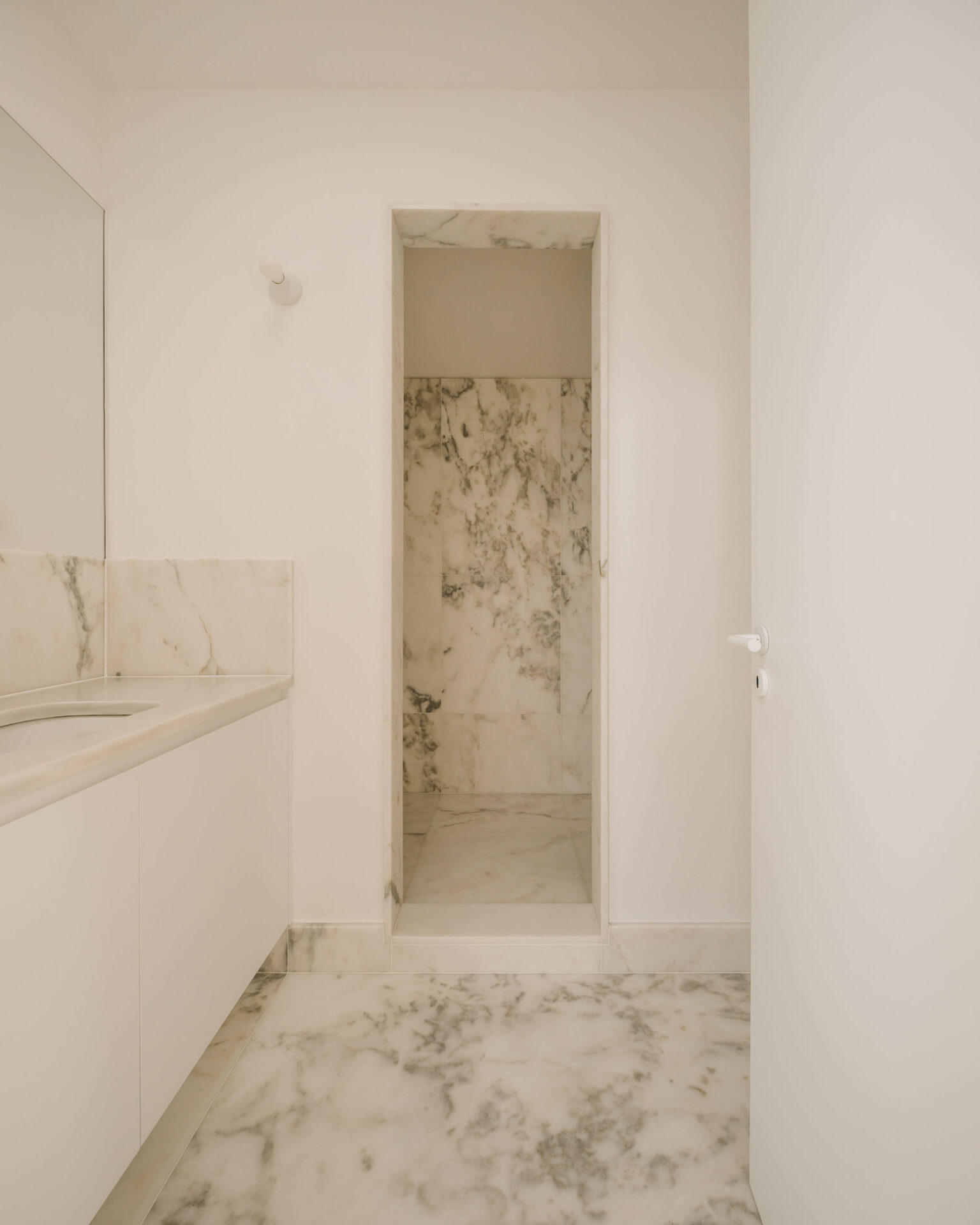
Material choices are restrained and consistent throughout. Pine floorboards, Estremoz marble, and integrated joinery define the interior, allowing natural light and spatial proportions to remain the primary focus. Storage is fully integrated into circulation areas, including concealed volumes within the library and stair zones.
A secondary, fully independent apartment is incorporated into the scheme with its own street access. Arranged around the second courtyard, it includes a kitchen, living space, office or bedroom, and bathroom, and can function as guest accommodation, workspace, or separate living unit.
The project combines structural transformation with precise architectural intervention, adapting an industrial building for contemporary residential use while maintaining its original spatial qualities.
Architecture: Jose Adrião Architects
Photography: Lourenço Tabreu